SSO for the Non Paying Organization

Follow these steps to enable Single Sign-On (SSO) for your organization.

Please read through all steps before you begin this process. Make sure you inform all Aconex users in your organization that the way they sign into Aconex will change. 

An Identity Domain (sometimes referred to as an IDCS Stripe) is required to enable SSO, and is included with all Oracle Cloud Accounts. The steps to enable SSO are different depending on whether your organization already has an Identity Domain or not. 

Does your organization have an Identity Domain?

An Identity Domain (sometimes referred to as an IDCS Stripe) is included with all Oracle Cloud Accounts. From December 2025 all new Aconex paying customers are required to activate their Aconex subscription into an Oracle Cloud Account, which also includes an Identity Domain. 

If your organization uses other Oracle products, such as P6, OPC, Unifier, ERP, you may already have an Identity Domain. Determine if you can use your existing Identity Domain or if you need to create a new one.

Tip!

If you don't know if your organization has an Oracle Cloud Account or you are unable to access it, visit the Oracle Contact page and click Open a live chat to get help.

Before you begin

Use my organization's existing Identity Domain

Follow these steps if your organization already has an Identity Domain. You must complete all steps sequentially to ensure your SSO configuration is a success.

  1. Your technical contact sets up the Identity Domain with the SAML configuration for their Identity Provider (e.g. Entre ID, ADFS, or other). You may need assistance from your organization's IT department. 
  2. Your technical contact raises a support request ticket with the subject Aconex SSO activation request and provides the following information for each organization you manage that you want to enable SSO for:
  • The Aconex instance the organization is registered on.
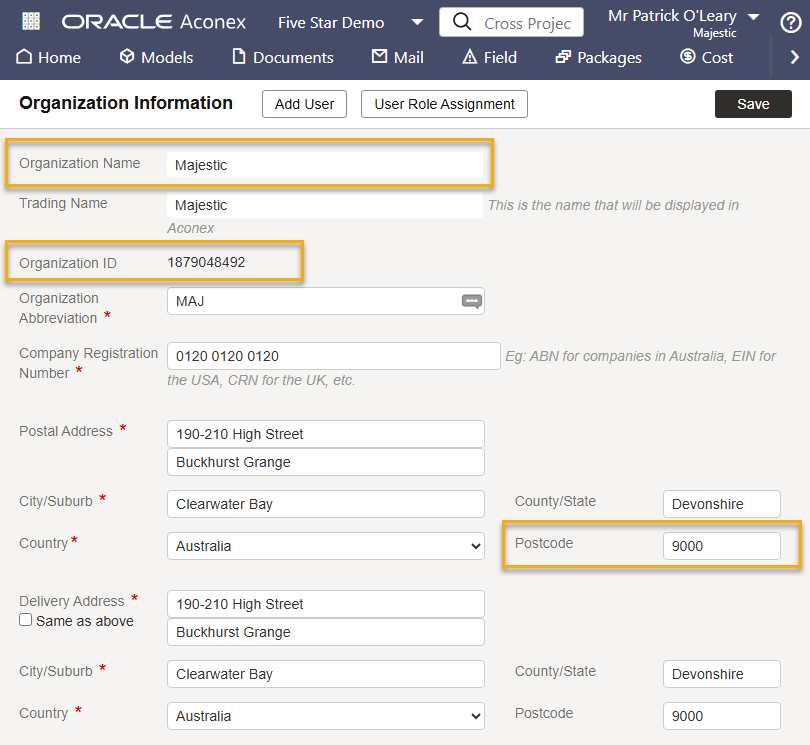
  • An attached screenshot of the Organization Details page (under the Setup menu) in Aconex, clearly showing the Aconex organization name, organization ID, and postcode. See an example screenshot.
  • Your Identity Domain URL.
    The URL will look something like this: https://idcs-{ID}.identity.oraclecloud.com/ui/v1/myconsole. You can find your Domain URL in the overview screen. Learn more
  1. Oracle will configure the Lobby to use your Identity Domain. Your technical contact will be notified in the support request ticket when this is completed.

Important: Your technical contact must complete the next step to create an Identity Provider Policy as soon as possible after receiving notification from Oracle. Delaying this step will disrupt access to Aconex for all users in your organization.

  1. Your technical contact creates an Identity Provider Policy in your Identity Domain. You may need assistance from your organization's IT department.
  2. Your technical contact signs in to the Lobby to test and ensure the SSO authentication is successful. You should be taken to your organization's Single Sign-On screen. Enter your SSO username and password, and the Lobby will open. If this does not happen, you must go back and complete the previous step.
  3. Your organization's users will be redirected to your organization's Single Sign-On screen when they next try to access Aconex or the Lobby. If they are not automatically redirected, they need to click the change email address icon on the sign in screen, re-enter their email address, and click Sign In.

My organization needs an Identity Domain

Follow these steps if your organization doesn't have an Identity Domain, or needs a separate one for Aconex. You must complete all steps sequentially to ensure your SSO configuration is a success.

  1. Your technical contact signs up for an Oracle Cloud Free TierNote: You'll need to provide a credit or debit card for account setup and identity verification. For more information visit the OCI Cloud Free Tier FAQ and click the FAQ titled: "Why do I need to provide credit or debit card information when I sign up for Oracle Cloud Free Tier".
  2. Your technical contact activates your organization's Oracle Cloud account
  3. Your technical contact sets up the Identity Domain with the SAML configuration for their Identity Provider (e.g. Entre ID, ADFS, or other). You may need assistance from your organization's IT department.
  4. Your technical contact raises a support request ticket with the subject Aconex SSO activation request and provides the following information for each organization you manage that you want to enable SSO for:
  • The Aconex instance the organization is registered on.
  • An attached screenshot of the Organization Details page (under the Setup menu) in Aconex, clearly showing the Aconex organization name, organization ID, and postcode. See an example screenshot.
  • Your Identity Domain URL.
    The URL will look something like this: https://idcs-{ID}.identity.oraclecloud.com/ui/v1/myconsole. You can find your Domain URL in the overview screen. Learn more
  1. Oracle will configure the Lobby to use your Identity Domain. Your technical contact will be notified in the support request ticket when this is completed.

Important: Your technical contact must complete the next step to create an Identity Provider Policy as soon as possible after receiving notification from Oracle. Delaying this step will disrupt access to Aconex for all users in your organization.

  1. Your technical contact creates an Identity Provider Policy in your Identity Domain. You may need assistance from your organization's IT department.
  2. Your technical contact signs in to the Lobby to test and ensure the SSO authentication is successful. You should be taken to your organization's Single Sign-On screen. Enter your SSO username and password, and the Lobby will open. If this does not happen, you must go back and complete the previous step.
  3. Your organization's users will be redirected to your organization's Single Sign-On screen when they next try to access Aconex or the Lobby. If they are not automatically redirected, they need to click the change email address icon on the sign in screen, re-enter their email address, and click Sign In.